

Freedom from free will: Good riddance to the self
Reading | Free Will
 Kadira Pethiyagoda, PhD | 2024-10-20
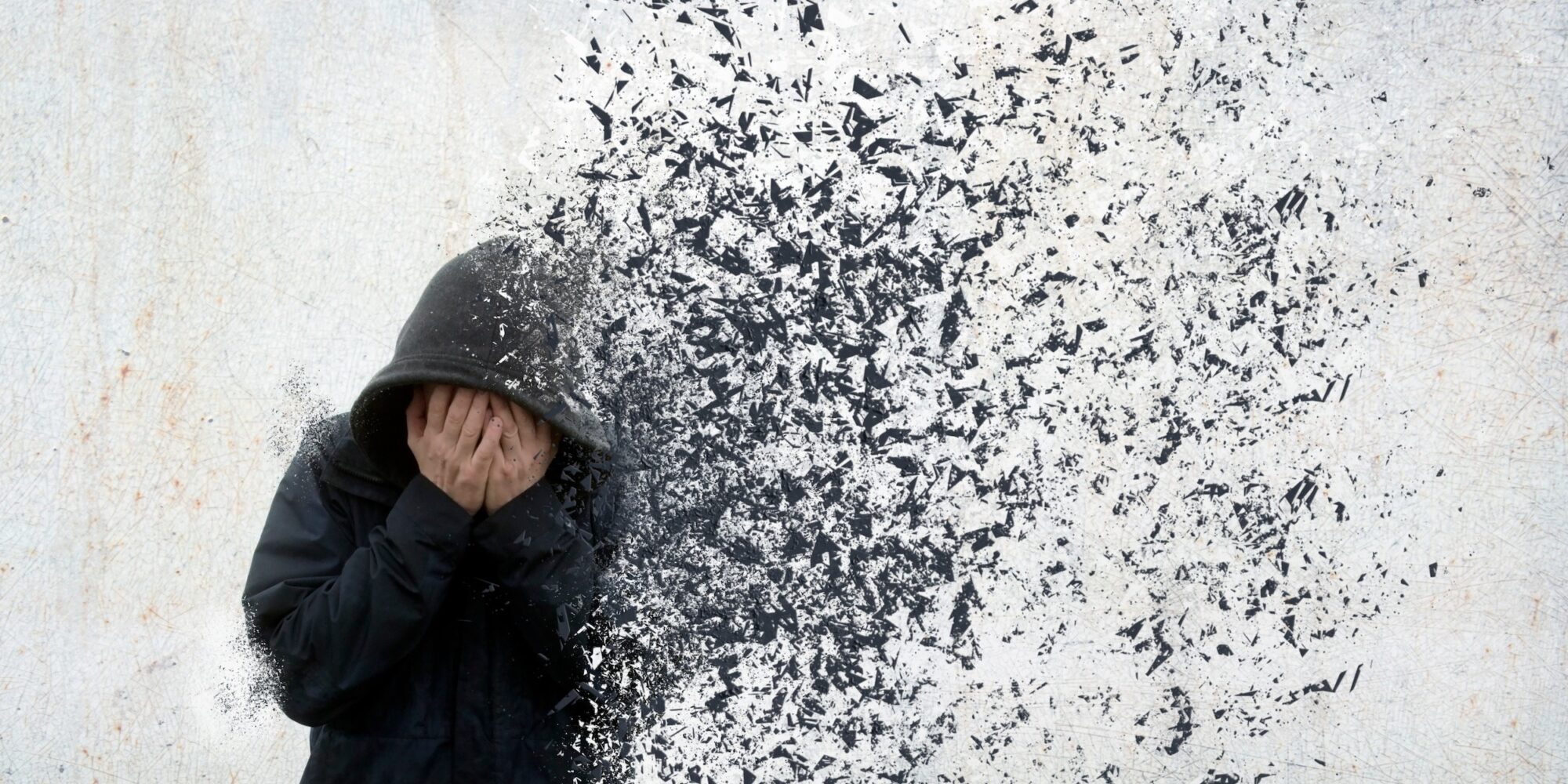
As any essay on free will, the present one is bound to be polemic. We believe the debate on free will is important and the present essay meaningfully contributes to it. Nonetheless, we feel bound to clarify our editorial position here: as a foundation dedicated to promoting objective formulations of metaphysical idealism, we endorse the existence of a reality beyond the seemingly personal self, which behaves in a predictable, lawful manner. An implication of this view is the impossibility of libertarian free will: we do make our own choices, but our choices are determined by that which we, and the universe around us, are. Yet we believe that there is a very important sense in which free will does exist: under idealism, the universe is constituted by the excitations of one, universal field of subjectivity. The impetus towards self-excitation that characterizes this field of subjectivity is free will, for it depends on nothing else. The entire dance of universal unfolding is a dance of universal free will. This is the sense in which, for example, Federico Faggin and our own Bernardo Kastrup defend the fundamental existence of free will in nature. This understanding of free will is entirely compatible with the understanding that our choices are determined but that which we truly are. Finally, objective formulations of metaphysical idealism deny, just as the author of the present essay does, the fundamental existence of a personal self. Instead, the latter is regarded as a transient, reducible configuration of the underlying field of subjectivity. As such, there cannot be such a thing as personal, egoic free will, for the personal self itself isn’t a fundamental construct.
Hootie & The Blowfish’s 1995 song Time still evokes memories for me of my surroundings when it first hit: wafting, amidst diesel fumes, from the radio of the poorly air-conditioned van snaking around the hillsides of Nuara Eliya, Sri Lanka. Its mournful, dejected, and regretful nostalgia was clear to even a 15-year-old who as yet had nostalgia but no regrets. Those would only be accumulated in the following decades. Education, relationships, career, politics, height—an endless list, punctuated by a few that are both cardinal and cyclical.
This may sound familiar to others who assign themselves exceptional degrees of agency—a personality trait suspiciously suitable to late-stage capitalism. You can achieve anything if you set your mind to it, and if you don’t it’s because you didn’t set your mind to it. Or you did set your mind to it, attained it, and then squandered it. And that’s the stench that lingers longest. That’s why, in the years following, despite considering Germany, Bavaria, Austria, as the most beautiful landscapes on earth, you could not visit. That’s why it’s hard to watch Sound of Music, see the Wallace Collection’s Germanic ground floor armory collection, or discover how Tolkien and C.S. Lewis were inspired by a guy who was inspired by German fairytales. Because you could have gone there before, at some earlier time, as something better than you are now. Could have.
Science and free will
As with many causes of suffering, persistent regret might be alleviated by many tools, from self-compassion to meditation and other Eastern teachings. One potential tool that has been remarkably underutilized is the very nature of reality itself, understood from, at least (but not only) a scientific perspective. We believe scientists when they tell us truths, like reduce cholesterol to avoid heart disease, or sugar to avoid diabetes, or that carbon monoxide might kill you, or reduce CO2 emissions to reduce climate change. In physics, the truth of how atoms behave has impacted society at the highest levels—the nuclear bomb delineating Great Power geopolitics for almost a century. Even science’s most cutting-edge truths—fields like quantum physics—are seeing application in computing technology. But a truth that has more fundamental relevance than any of these—relevance to the meaning we give to life itself—has garnered barely any attention, let alone application. This is the truth of no free will.
The conventional wisdom across all relevant fields of science is that there is an absence of any evidence that free will exists. And evidence against free is found in realms ranging from neuroscience, to philosophy, to evolutionary biology and anthropology. Neuroscientists such as Robert Sapolsky would say that a Sri Lankan-Australian graduate choosing to leave Australia’s diplomatic service earlier than batchmates is due in large part to a plethora of evolutionary and cultural factors. From Lanka’s soft communitarianism to the Australian upper-middle class inheriting the British ruling class’s ‘stiff upper lip,’ cauterized over generations of dispatching boys to brutalizing boarding schools so that they could be posted overseas and administer empire in solitude.
This author’s epiphany came in his early 20s and was based simply in logic: that every decision is the product of the body we were born with and the experiences we have had—neither of which are within our control. If one accepts the universe is governed by cause and effect, with no interference from magic, supernatural forces, then all our choices are governed by things that came before it. A line of causation leading back through the mists of time to factors billions of years beyond our control.
The physics of time
The most convincing, and therefore reassuring, evidence for the lack of free will, I found in physics. Like a Philips Head screwdriver after a month of butter knives. Stemming from Einstein’s insights, general relativity, the fact that what one experiences as ‘now’ is different according to location and relative velocity—all beautifully explained in Brian Greene’s PBS documentary. An alien on the other side of the universe, if cycling towards us even at a “leisurely pace,” has a ‘now’ that is hundreds of years in our future. And because of cosmic democracy—that their now is just as real as our now—the future is just as real as the present. Which means it already exists. Which means it’s already set. And which means we don’t have to worry anymore.
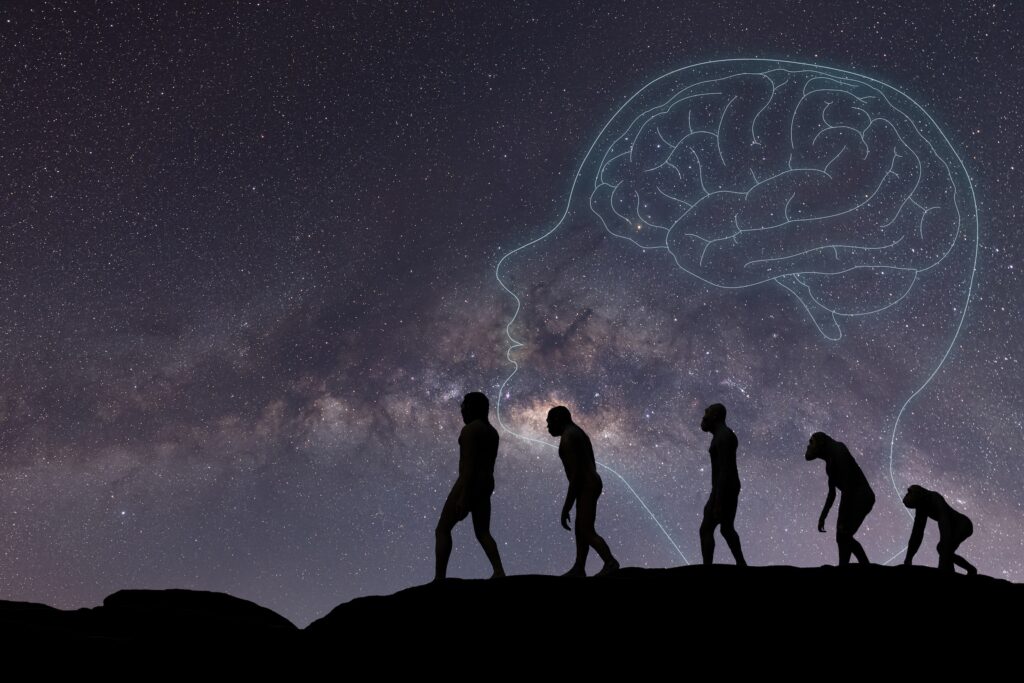
As a youth I thought time equaled change, change equaled movement (at the tiniest particle levels), and for there to be movement there must be space and/or more than one thing, which wouldn’t have been the case during the singularity/pre Big Bang. Physicists, almost universally, hold that time is an emergent property of the universe, not a fundamental one. The mathematics reveals that if time is ejected from the equations, they still work. Not a three-dimensional universe that changes, but a four or more-dimensional block in which nothing happens. Happenings are simply a trick of the savannah-grown mind. As per Einstein’s famous consolation, “for us believing physicists, the distinction between past, present and future is only a stubbornly persistent illusion.”
And with that the undoing of millennia of guilt, of blame, of judgment. ‘Could have’ has no meaning. ‘Deserve’ has no meaning. All we do, all we have ever done, was laid out already since the Big Bang, or before. To pursue her and not her, to choose this diplomatic posting and not that, to stand as a candidate in this seat and not that, to support this war and not that—all pre-determined.
Accepting this, not merely intellectually but instinctively, makes the past appear different. It doesn’t look like life as recognized before. No longer a three-dimensional place where one could have moved left instead of right, gone down this path instead of that. Rather, it is a tightrope, from which one could never dismount; it is as free as a bull driven through the streets of Pamplona toward the bullring; as a cog spinning in the direction it was always going to spin; a tightrope so thin it is one-dimensional; no width; as thin as height in a two-dimensional flatland; as thin as the present moment.
And all those erstwhile regrets, no longer having space to reside in the past, are forced into the future, where they transform into possibilities. The forests of Bavaria, from the fairytales of childhood and the Disney of adolescence, were not a destiny to be realized as a diplomat in your late 20s. And thus, it was not destiny-denied by choosing the New Delhi posting instead of Berlin or because of later leaving the service altogether. All of these decisions were already cast. They were cast when yearning for South Asian community in Canberra, when missing the advice of a colleague away sick that day, when Sri Lankans were kind, when Indian girls were prettiest, when inside one of University’s cool crews, when born into a collectivist culture, when the Bolsheviks overturned the order, when the British subdued the Kandyans in 1815, when Buddha preached compassion to animals 2500 years ago, when water came to earth 3.8 billion years ago, and when this recognizable universe of something and negative something formed from nothing 13.8 billion years ago (perhaps).
All these things (except perhaps the last) were things that Brian Greene’s alien could consider as his ‘now,’ depending on how fast he peddled his bike away from us. And cycling toward us, he could see the results of all those causes; results that could never have been any other way. Germany, Bavaria, international intrigue in Europe, was never to happen back then. Not opportunities wasted. Just things not experienced. Yet. All that emotional juice is squeezed from a self-blamed past to an unrevealed future; one that, despite being predetermined, is a place where, for all we know, it could happen.
Before this realization, the only way worthy of entering Germany would have been as a diplomat, so to befit the foregone opportunity; the only way to rectify the earlier mistake. But now you can travel there as what you are now. And what you are now, is enough. Because you could never have gone there as a diplomat anyway. You could even stay in backpacker accommodation and it would still be more than you have ever sacrificed. Because you have not sacrificed anything; you have not foregone anything. Because you had no choice. And with that comes gratitude for the life that actually was given, and was pretty damn cool.
The fear
Society’s current configuration has meant resistance to concepts of determinism and no free will. Free will desperados have sought refuge in physics itself: namely, the trippy truths of quantum physics, that particles (which make up matter) exist in multiple states (superposition) until each interacts with something else, at which point it collapses into one of those states, the chosen state being not fully predictable; and that measuring a particle here can impact, instantly, the measurement of a different particle elsewhere (nonlocality). Quantum physics suggests that the universe is ultimately unpredictable. But whether one’s decision is the result of a plethora of factors stretching back millennia or random quantum events inside neurons, the decision is not governed by you, the self’s freedom simply being usurped by unpredictable forces rather than predictable ones.
The need to find some minute cranny into which free will can be shoehorned, like the God-of-the-gaps argument, reveals a fear across Western society at the loss of this fundamental assumption. Free will is actually as difficult to prove and easier to disprove than the existence of an Abrahamic god. Yet, while the latter was the target of thousands of hours of YouTube ridicule by ‘New Atheists,’ Google ‘free will’ and top results are articles rebutting the majority scientific view, almost like when the media hates a public figure and they disseminate the person’s opponents’ counter-statements against them without even broadcasting the public figure’s original comments. As Einstein said, “if the moon, in the act of completing its eternal way around the earth were gifted with self-consciousness, it would feel thoroughly convinced that it was traveling … of its own accord.”
No self
From a mental health perspective, while for a protagonist personality acceptance of no free will is a welcome cooling of passions, it may not seem beneficial for all. But what it points to is something that does have the potential to ease suffering for all: the absence of a self.
In bygone eras, society’s judgments of individuals, and people’s own self-worth, rested partly upon things like ancestry or skin tone. Today, judgment is cast on fewer criteria: one’s moral choices, achievements and transgressions. It’s not what you were born with but what you do. The ‘successful’ are revered and the evildoers condemned. Individuals base much of their personal worth on their attainments in life—the remaining essence of what makes you, you. But science reveals these to be just as outside one’s control, and therefore just as fatuous a reason to judge someone, as who their father was. Like the God-of the-gaps or free will, the ‘self’ looks to have been routed from its last refuge.
Not all see this as a shocking or even negative revelation. Nor is it a materialist retreat from spirituality; rather, the opposite. Most of the world’s spiritual traditions, just as they are more deterministic, are also less individualistic. They subscribe to a more external locus of control than Protestant-rooted, Enlightenment-shaped contemporary Western culture. Of these, Buddhism offers perhaps the most developed arguments for why there is no self. Anattā consists of the view that no permanent essence, no soul, exists in any phenomenon, including Homo sapiens. This concurs with the evident reality that atoms and energy are constantly entering and leaving one’s body via food, breath, evaporation, etc. We are obviously not the same physical set of particles we were at birth. So, too, our constantly changing mental configuration. The ‘you’ who then made the now gut-wrenching decision was different, so there is no point blaming the ‘you’ of now. The ‘you’ of then was just as different from the ‘you’ of now as a ‘you’ in another universe, or one of the many ‘yous’ in this universe who seem different and whose actions have an impact on you, such as your partner or the Prime Minister. Like a jigsaw puzzle with all black pieces, when the pieces are jumbled they seem separate, individual. But when slotted together correctly they disappear into one whole, a whole which itself is nothing.
Accepting no-self undercuts a principal cause of suffering: the ego—evolved from millennia of chasing rewards and fleeing threats. Understanding that there is no ‘me,’ and no me separate from the environment, loosens the grip of desires and attachments to fleeting phenomena that fuel dissatisfaction. This aligns with other dharmic traditions like Hinduism, which emphasizes the oneness of all things in the universe.
At the macro level, appreciating that all beings are morally equal, not simply at birth but always, is more conducive to a more compassionate, harmonious society. Some may fear a hopeless nihilism that results in a more compliant populace vulnerable to oppression by those in power. But the current system of treadmill-chasing after confected prizes and status as atomized wage-slaves already ensures system-compliance under the banner of meritocratic democracy.
If the establishment or ruling class itself imbibes determinism and no-self, society can become more egalitarian and prioritize relief from suffering where it is most needed. An erstwhile military industrial complex investor, unmotivated by money-status-achievement will be less likely to bribe politicians for the next war and order the newsman to promote it. From each according to his ability to each according to his needs because there is no such thing as earned merit.
Conclusion
The Buddha once uttered something like “there are more tears shed than there is water in all the world’s oceans.” 2500 years later, Hootie asked “Time … why you punish me?” The answer is our complete misconception of both ‘time’ and ‘me’: the illusion that the future is different from the past, and that ‘I’ exist separate from the world. We cling onto an ever-crumbling precipice, making ‘choices’, regretting some and taking pride in others; all things that Brian Greene’s alien, with his ‘now’ cycling back thousands of years, would have seen coming. And perhaps he would see our tears as we would see the tears of a pig regretting birthing her baby in a factory farm for a lifetime of suffering, or a bull regretting going the wrong way when being stabbed in the bullring. The alien would know, as we do, that it’s not their fault.
Essentia Foundation communicates, in an accessible but rigorous manner, the latest results in science and philosophy that point to the mental nature of reality. We are committed to strict, academic-level curation of the material we publish.
Recently published
|
Does Analytic Idealism limit the scope of its own conclusions and implications because of its adoption of realist, empirically-focused, scientific concepts and argument structures? If so, can the notion of a meta-conscious (that is, self-aware, deliberate) universal consciousness be reconciled with it? Dr. Grego argues precisely so in this critical essay.
|
Hans Busstra and Dr. Lídia del Rio talk to Dr. Matthew Leifer, Assistant Professor of Physics at Chapman University, about the epistemic interpretation of quantum mechanics. Classically, when physicists call themselves ‘realists’ they mean that we should assume that a physical, observer-independent universe is fundamental. But if this counts as realism, anti-realism is perhaps the more respectable position. Leifer points, for instance, to ‘Bell-Wigner mashups’: thought-experiments that entangle different observers to arrive at disturbing consequences; for instance, that there is no ‘absoluteness of facts’ for all observers, in a classical sense.
From the archives

|
What if phenomenal consciousness, signs, communication, and interpretation are fundamental aspects of all living systems, whether or not we can detect brains? This is the departure point of biosemiotics, an interdisciplinary field that combines biology, semiotics (the study of signs and meaning), and philosophy. Environmental philosopher Dr. Yogi Hendlin is Editor-in-Chief of the Journal of Biosemiotics and, in this conversation, Hans Busstra talks to him about the widespread meaning-making in nature. All living beings, from bacteria to plants to mammals, have an ‘Umwelt,’ a dashboard representation of the world. In a sense, biosemiotics states that our mind is in the world: we are embodied beings, and with every inhalation 50.000 microbes enter our body, and they communicate to us by influencing our microbiome.

|
Professor Zaghi introduces Relational Quantum Dynamics (RQD), a further development of Carlo Rovelli’s Relational Quantum Mechanics (RQM) with a solid mathematical and metaphysical basis. RQD circumvents the infinite regress inherent to RQM (everything being constituted of relations between meta-relations, and these consisting of relations between meta-meta-relations, etc., ad infinitum) by proposing that, although all physical entities are indeed relational, the relations—and even spacetime itself—arise within an underlying field awareness.
|
Hans Busstra talks to Dr. Bernardo Kastrup about the groundbreaking work of Professor Michael Levin and Dr. Christof Koch. Levin’s research into bio-electric fields reveals that cellular networks use electrical signals not just for immediate physiological tasks, but to coordinate complex patterning and memory across tissues—suggesting a kind of distributed intelligence in living systems. Christof Koch, meanwhile, champions Integrated Information Theory (IIT), which proposes that consciousness is an intrinsic property of certain physical systems with high levels of causal interconnectivity. Both lines of inquiry challenge the traditional reductionist view that mind is merely an emergent byproduct of neural activity. Instead, they point to a more holistic, perhaps even fundamental, role for information and consciousness in nature. Though Levin and Koch make no explicit metaphysical claims in their work, their empirical findings and views are very much in line with analytic idealism.
Reading
Essays
|
Dr. David Schmid, Dr. Lídia Del Rio and Hans Busstra explore a metaphysical shift that’s happening in the foundations of physics: the wave function is no longer regarded as something real, but just as a description of what we know about the world. In philosophical terms: the wave function is not ontic, but epistemic. And in more popular terms: the multiverse is science fiction, resting on a too-literal interpretation of a piece of mathematics called the Schrödinger equation.
|
The jealous and alienating gnostic Demiurge, a certain mode of attending to the world described by Heidegger, and Iain McGilchrist’s characterisation of the brain’s left-hemisphere, all share remarkable similarities, according to Arthur Haswell. He suggests thus that the Demiurge may be a symbol of something that lives in us, modulating how we relate to others and the world at large. As such, the holistic perspective of the right hemisphere may be a corrective that brings us closer to the transcendent and truly divine.
|
What if phenomenal consciousness, signs, communication, and interpretation are fundamental aspects of all living systems, whether or not we can detect brains? This is the departure point of biosemiotics, an interdisciplinary field that combines biology, semiotics (the study of signs and meaning), and philosophy. Environmental philosopher Dr. Yogi Hendlin is Editor-in-Chief of the Journal of Biosemiotics and, in this conversation, Hans Busstra talks to him about the widespread meaning-making in nature. All living beings, from bacteria to plants to mammals, have an ‘Umwelt,’ a dashboard representation of the world. In a sense, biosemiotics states that our mind is in the world: we are embodied beings, and with every inhalation 50.000 microbes enter our body, and they communicate to us by influencing our microbiome.
|
Professor Zaghi introduces Relational Quantum Dynamics (RQD), a further development of Carlo Rovelli’s Relational Quantum Mechanics (RQM) with a solid mathematical and metaphysical basis. RQD circumvents the infinite regress inherent to RQM (everything being constituted of relations between meta-relations, and these consisting of relations between meta-meta-relations, etc., ad infinitum) by proposing that, although all physical entities are indeed relational, the relations—and even spacetime itself—arise within an underlying field awareness.
|
Hans Busstra talks to Dr. Bernardo Kastrup about the groundbreaking work of Professor Michael Levin and Dr. Christof Koch. Levin’s research into bio-electric fields reveals that cellular networks use electrical signals not just for immediate physiological tasks, but to coordinate complex patterning and memory across tissues—suggesting a kind of distributed intelligence in living systems. Christof Koch, meanwhile, champions Integrated Information Theory (IIT), which proposes that consciousness is an intrinsic property of certain physical systems with high levels of causal interconnectivity. Both lines of inquiry challenge the traditional reductionist view that mind is merely an emergent byproduct of neural activity. Instead, they point to a more holistic, perhaps even fundamental, role for information and consciousness in nature. Though Levin and Koch make no explicit metaphysical claims in their work, their empirical findings and views are very much in line with analytic idealism.
Seeing
Videos

|
“If experience is all I have, I may be alone—but the essential emotional necessity of the other demands that I live as if I am not,” argues Dr. Moreira in this heart-felt essay. He embodies a long-overdue reemergence of existentialist thought in the 21st century and, as an active and successful AI scientist, in 21st century terms. We think both the worlds of philosophy and popular culture will be hearing a lot more from Dr. Moreira in the coming years…

|
Dr. Edward Kelly, a professor of experimental psychology, talks about his many years of study of a variety of psi and anomalous phenomena. In this interview with Natalia Vorontsova, he candidly shares how phenomenological evidence has led him to re-examine his metaphysical views on the nature of reality. Are our minds confined to our brains? Do we survive our biological death? Is mind primary to matter? Why should we take anomalous phenomena seriously? These are some of the topics covered in this conversation.

|
Fredric Nord argues that knowing reality through language is fundamentally and inescapably a misunderstanding of reality. We misunderstand what language actually does and, thereby, misunderstand what life is. The key to understanding life is, he argues, a reframing of language and representation. This should end the paradigm of materialism and facilitate transcendence as a priori.
Let us build the future of our culture together
Essentia Foundation is a registered non-profit committed to making its content as accessible as possible. Therefore, we depend on contributions from people like you to continue to do our work. There are many ways to contribute.