

The mathematical logic of consciousness
Seeing | Philosophy
 Prof. dr. Henk Barendregt | 2022-01-02
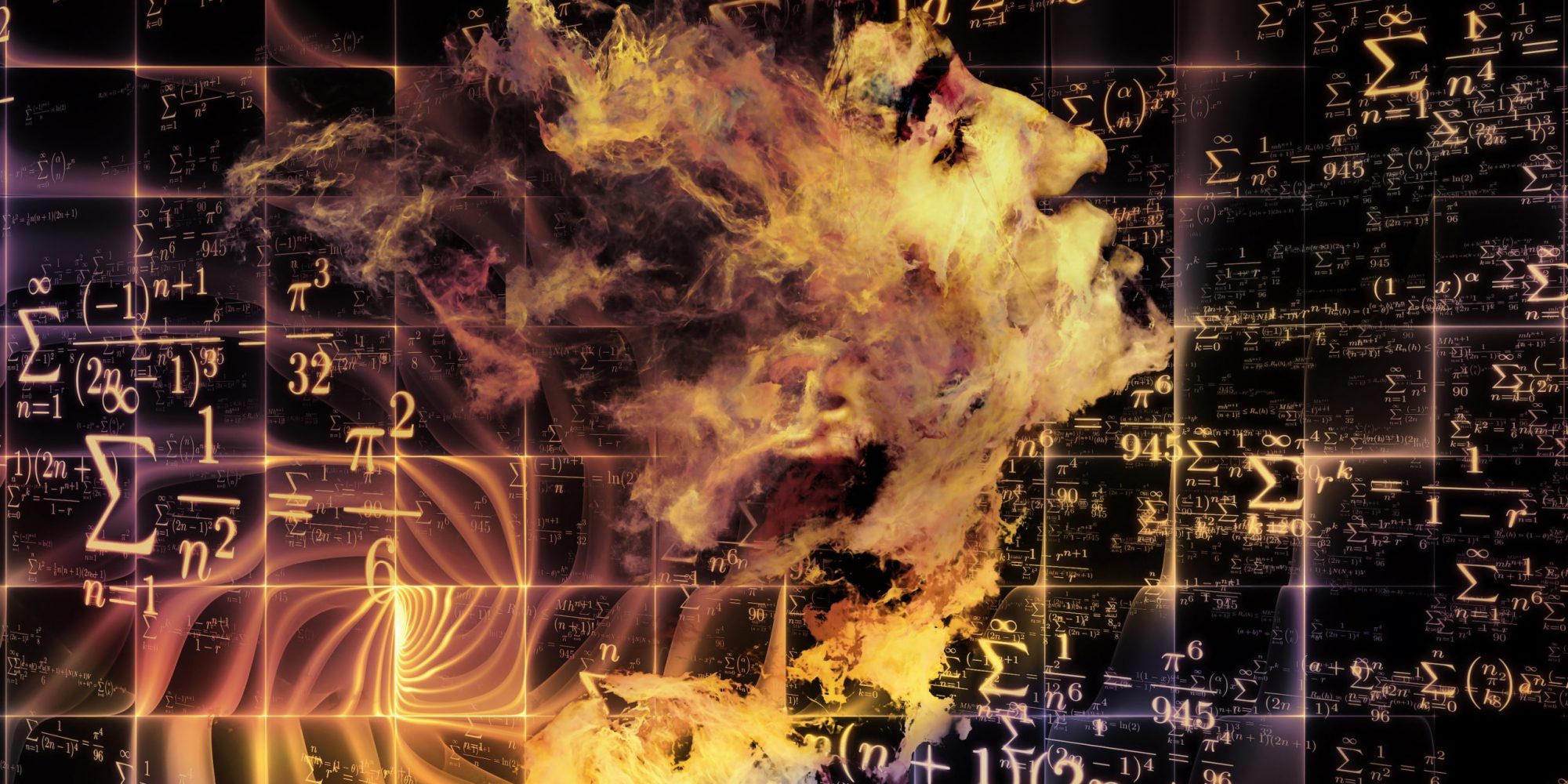
In the second presentation of the ‘Science of Consciousness’ conference 2021, Prof. dr. Henk Barendregt brings the rigor of mathematical logic to our understanding of consciousness and its various states and manifestations. For good measure, he also discusses Vipassana meditation within this formal context. We had an issue with audio noise in the first seconds of his presentation, but it goes away quickly, so don’t be discouraged.
Essentia Foundation communicates, in an accessible but rigorous manner, the latest results in science and philosophy that point to the mental nature of reality. We are committed to strict, academic-level curation of the material we publish.
Recently published
|
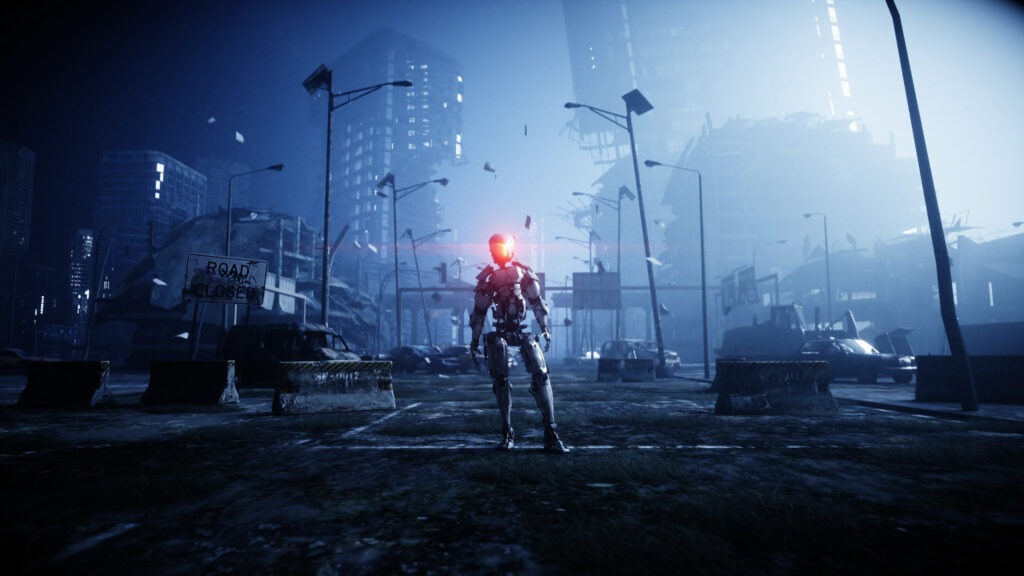
Dr. Colborn argues that, perhaps surprisingly, the worldview of the technology elite is shifting from fundamentalist materialism to a form of apocalypticism that echoes fundamentalist Christianity. This shift in belief is, according to Colborn, not based on an honest search for truth, but instead an attempt to legitimize agendas of power and control. As such, it risks dehumanizing humanity. The analysis in this essay is particularly important in today’s world of emerging agentic AI, wherein—insofar as we believe that AI mechanisms are conscious—we may end up believing that conscious beings are mere mechanisms. Dr. Colborn has just published a book with our own imprint, Essentia Books: What Lies Beyond.

|
In this interview, Dr. Philip Cozzolino, an associate professor of psychiatry and neurobehavioral sciences at the University of Virginia, talks with Natalia Vorontsova about his research results and methods for dealing with the fear of death. He also delves into intriguing reincarnation-like cases and past-life memories in children, as well as the metaphysical implications of his research.
From the archives
|
Hans Busstra talks to Dr. Bernardo Kastrup about the groundbreaking work of Professor Michael Levin and Dr. Christof Koch. Levin’s research into bio-electric fields reveals that cellular networks use electrical signals not just for immediate physiological tasks, but to coordinate complex patterning and memory across tissues—suggesting a kind of distributed intelligence in living systems. Christof Koch, meanwhile, champions Integrated Information Theory (IIT), which proposes that consciousness is an intrinsic property of certain physical systems with high levels of causal interconnectivity. Both lines of inquiry challenge the traditional reductionist view that mind is merely an emergent byproduct of neural activity. Instead, they point to a more holistic, perhaps even fundamental, role for information and consciousness in nature. Though Levin and Koch make no explicit metaphysical claims in their work, their empirical findings and views are very much in line with analytic idealism.

|
“If experience is all I have, I may be alone—but the essential emotional necessity of the other demands that I live as if I am not,” argues Dr. Moreira in this heart-felt essay. He embodies a long-overdue reemergence of existentialist thought in the 21st century and, as an active and successful AI scientist, in 21st century terms. We think both the worlds of philosophy and popular culture will be hearing a lot more from Dr. Moreira in the coming years…

|
Dr. Edward Kelly, a professor of experimental psychology, talks about his many years of study of a variety of psi and anomalous phenomena. In this interview with Natalia Vorontsova, he candidly shares how phenomenological evidence has led him to re-examine his metaphysical views on the nature of reality. Are our minds confined to our brains? Do we survive our biological death? Is mind primary to matter? Why should we take anomalous phenomena seriously? These are some of the topics covered in this conversation.
Reading
Essays

|
What if phenomenal consciousness, signs, communication, and interpretation are fundamental aspects of all living systems, whether or not we can detect brains? This is the departure point of biosemiotics, an interdisciplinary field that combines biology, semiotics (the study of signs and meaning), and philosophy. Environmental philosopher Dr. Yogi Hendlin is Editor-in-Chief of the Journal of Biosemiotics and, in this conversation, Hans Busstra talks to him about the widespread meaning-making in nature. All living beings, from bacteria to plants to mammals, have an ‘Umwelt,’ a dashboard representation of the world. In a sense, biosemiotics states that our mind is in the world: we are embodied beings, and with every inhalation 50.000 microbes enter our body, and they communicate to us by influencing our microbiome.

|
Professor Zaghi introduces Relational Quantum Dynamics (RQD), a further development of Carlo Rovelli’s Relational Quantum Mechanics (RQM) with a solid mathematical and metaphysical basis. RQD circumvents the infinite regress inherent to RQM (everything being constituted of relations between meta-relations, and these consisting of relations between meta-meta-relations, etc., ad infinitum) by proposing that, although all physical entities are indeed relational, the relations—and even spacetime itself—arise within an underlying field awareness.
|
Hans Busstra talks to Dr. Bernardo Kastrup about the groundbreaking work of Professor Michael Levin and Dr. Christof Koch. Levin’s research into bio-electric fields reveals that cellular networks use electrical signals not just for immediate physiological tasks, but to coordinate complex patterning and memory across tissues—suggesting a kind of distributed intelligence in living systems. Christof Koch, meanwhile, champions Integrated Information Theory (IIT), which proposes that consciousness is an intrinsic property of certain physical systems with high levels of causal interconnectivity. Both lines of inquiry challenge the traditional reductionist view that mind is merely an emergent byproduct of neural activity. Instead, they point to a more holistic, perhaps even fundamental, role for information and consciousness in nature. Though Levin and Koch make no explicit metaphysical claims in their work, their empirical findings and views are very much in line with analytic idealism.
|
“If experience is all I have, I may be alone—but the essential emotional necessity of the other demands that I live as if I am not,” argues Dr. Moreira in this heart-felt essay. He embodies a long-overdue reemergence of existentialist thought in the 21st century and, as an active and successful AI scientist, in 21st century terms. We think both the worlds of philosophy and popular culture will be hearing a lot more from Dr. Moreira in the coming years…
|
Dr. Edward Kelly, a professor of experimental psychology, talks about his many years of study of a variety of psi and anomalous phenomena. In this interview with Natalia Vorontsova, he candidly shares how phenomenological evidence has led him to re-examine his metaphysical views on the nature of reality. Are our minds confined to our brains? Do we survive our biological death? Is mind primary to matter? Why should we take anomalous phenomena seriously? These are some of the topics covered in this conversation.
Seeing
Videos

|
Fredric Nord argues that knowing reality through language is fundamentally and inescapably a misunderstanding of reality. We misunderstand what language actually does and, thereby, misunderstand what life is. The key to understanding life is, he argues, a reframing of language and representation. This should end the paradigm of materialism and facilitate transcendence as a priori.
|
Physicist Dr. Lídia Del Rio, Essentia Foundation’s Research Fellow for Quantum Information Theory at the University of Zürich, explains to Hans Busstra one of the strangest quantum conundra confronting the foundations of physics: the Frauchiger-Renner (FR) thought experiment.

|
Dr. Dolezal invites us to consider the uncanny similarities between the ancient stories of creation, across many religious and philosophical traditions, and how the human imagination, when prompted or triggered by words, creates entire universes.
Let us build the future of our culture together
Essentia Foundation is a registered non-profit committed to making its content as accessible as possible. Therefore, we depend on contributions from people like you to continue to do our work. There are many ways to contribute.